
|
| |
The Cultivation of
Tobacco and the
Production of Cigars
|
back |
| |
|
|
The Cultivation of Tabacco
The unique Mix of Sun, Seed,
Earth, Love and Espertise
The areas of Tobacco Cultivation
Interesting Facts about the
Tobacco Plant
The Climate
Three Cultiavation Methods
Habanos conatin two Types of
Tobacco
The Cultivation of Tobacco
The Harvest
Air-drying
The First Fermentation
De-ribbing
and Sorting
The Second Fermentation
Storage
The Preparation of the Tobacco
The Production of Cigars
The Escaparate
Color Determination and
Attachment of Cigar Bands
| |
The Cultivation
of Tabacco
|
No one knows exactly
when tobacco was first
cultivated, but there is
hardly a doubt where
this occurred. The
indigenous Americans
were not only the first
people to farm this
plant, but also to smoke
it. The Taino and
Siboney Indian tribes
native to Cuba named the
tobacco plant "Cohiba".
Until 1492, the year
Christopher Columbus
discovered the land we
now call America,
tobacco was unknown to
the rest of the world.
With his return to
Europe, the plant was
introduced to Portugal
and Spain. The custom of
smoking spread, however,
very slowly out of Spain
by way of the
aristocracy and the
royal houses. In 1717,
cigars made from Cuban
tobacco were called “Sevillas”,
after the name of the
city in which they were
manufactured. Soon
after, a better quality
was demanded and thus
Sevillas were replaced
by
Cuban cigars. By the
middle of the 19th
Century, there were
already 9,500 tobacco
plantations on Cuba, and
factories shot up like
mushrooms from the
earth. America was the
most important export
market. |

|
The Unique Mix of
Sun, Seed, Earth,
Love and Expertise
|
Other countries such as
Honduras,
Dominican
Republic,
Nicaragua, Jamaica, the USA, Italy
and Holland, including
Switzerland, produced
very good cigars as
well. Each region
created it’s very own
characteristic taste in
a cigar. However, it is
the special geographic
location, the quality of
the earth, the climate,
passion and expertise,
which make the Havana
cigar unique from
generation to
generation, and this
over centuries.Over
many years when the
Cubans speak of cigars,
they no longer mention
Puros or Havanas, but
rather
HABANOS.
Habanos is a
registered trademark and
is the generic term for
all
Havana labels. The
name is geographically
protected, as is, for
example, Cognac,
Champagne or Scotch
Whisky. |
The Areas of Tobacco
Cultivation
|
|
|
|
| |
Over
the course of centuries,
five zones of tobacco
cultivation have formed
on the island of Cuba:

Click
on map to enlarge
Oriente Province
Las Villas
Camaguey
Region Remedios
Partidos (South of
Havana)
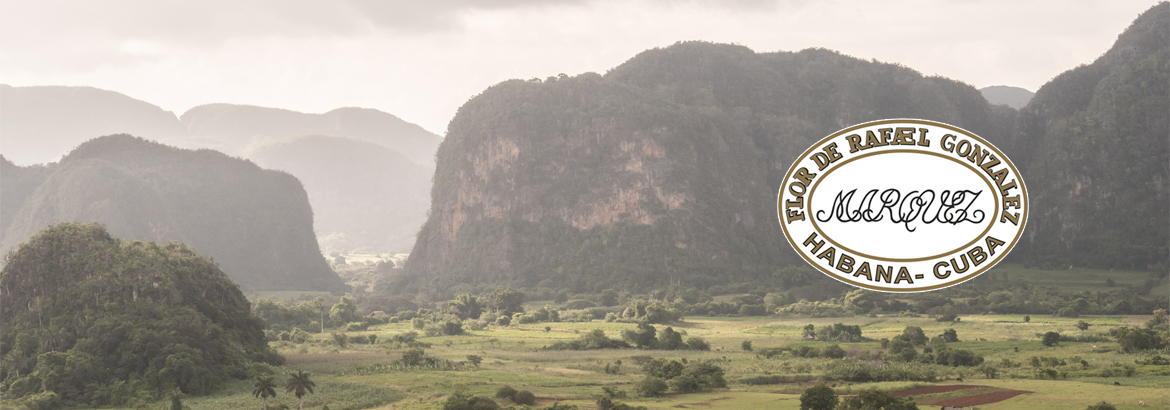
Vuelta Abajo (Pinar del
Rio Province)
They are divided in
to seven districts: El
Llano, Lomas, Renate,
Guane, Mantana, Costa
Sur and Costa Norte.
The finest
plantations, the “Vegas
Finas” are located in
the district El Llano,
between the
municipalities of San
Luis and
San Juan y
Martinez. However, the
best plantation of all
is that of Don Alejandro
Robaina in San Luis; in
1997, an own cigar label
was created in his
honor, the Vegas
Robaina.
Through the special
combination of alluvial
land and sandy earth
which is found no where
else in the world, this
soil has become
unsurpassed as that in
which to cultivate
tobacco, and thus
guaranteeing exceptional
harvests. |
|
|
|
|
| |
Interesting
Facts about the
Tobacco Plant
|

Although the tobacco
plant is not edible,
it is cultivated on
a large scale. It’s
scientific
designation,
Nicotiana, is named
after the French
researcher Jean
Nicot. Tobacco
belongs to the
family of night
shade plants (Solanacea),
which include the
potato, tomato,
paprika and chick
pea. By the way,
they all contain
nicotine, if only in
minute
concentrations,
however. The tobacco
plant has a
characteristic
pyramid form,
whereby the largest
leaves are found at
the base of the
plant, becoming
continually smaller
as they are found
higher on the stem.
The color of the
blossoms vary
between white and
pink. |

|
The Climate
|
The tobacco plant is
very dependent on
environmental
conditions such as
temperature, sun
exposure, and
humidity, and grows
best between 20°C
and 27°C. Frost and
temperatures below
14°C slow down it’s
growth, although the
plant can survive
temperatures down to
–3°C over short
periods. In
temperatures above
40°C, the delicate
leaves burn. |

|
Three Cultivation
Methods
|
Tapado para capas
naturales: The
tobacco is grown
under white tulle
cloth coverings,
which are stretched
on stilts over the
fields immediately
after planting. It’s
purpose is to
prevent excessive
exposure to
sunlight, to keep
harmful insects at
bay, and to protect
the seedlings from
the wind. In this
way, the precious
wrapper leaves
retain their smooth,
silky and
distinctive texture.
Tabaco del sol
ensarto: The
tobacco is fully
exposed to the sun
in order to
encourage a greater
variety of flavors
to develop.
Tabaco rubio:
This designation
indicates an
artificially-dried
“blond” tobacco,
which is used in the
production of
cigars. |

|
Habanos contain Two
Types of Tobacco
|

The Corojo-Plant for
the delicate
Wrapper:
Named after the
famous El Corojo
Vega Plantation
where it’s seeds
were developed, this
sort only supplies
leaves for the
wrappers (Capa), and
whose cultivation is
more costly than the
production of any
other kind of
tobacco found in a
Habanos. The Corojo
leaves found on the
stem are divided
into seven different
harvest categories.
To make things even
more complicated,
the wrappers are
additionally sorted
according to color:
Claro (light brown),
Colorado Claro
(medium brown),
Colorado (dark
brown), and Maduro
(black). The topmost
leaves are normally
too oily to be used
for wrappers and are
instead used in the
filler. - Flower
- Full-bodied,
strong leaves
- Full-bodied,
slightly less strong
leaves
- Finest wrapper
quality
- Finest wrapper
quality
- Mild wrapper
quality
- Very mild wrapper
quality or for
filler

The
Criollo-Plant for
the Filler or the
Binder:
The Criollo-plant
produces four of the
five tobacco leaves
which are blended
into the filler in
order to create the
diversity of taste
variations which one
can find in the
numerous, different
Habanos labels. The
Criollo rounds out
the completed blend
to make it a
symphony of flavor.
It is the original
tobacco
of
Cuba.
- Flower
- Full-bodied,
strong leaves
(filler tobacco)
- Full-bodied,
slightly less strong
leaves (filler
tobacco)
- Aromatic,
moderately strong
leaves (binder or
filler)
- Aromatic,
moderately strong
leaves (binder or
filler)
- Aromatic, mild (binder)
|

|
The Cultivation
of Tobacco
|
|
The National Tobacco
Research Center
provides seeds to
the tobacco farmers
(Vegueros). Only the
very best and most
resistant seeds are
employed. So that
the tobacco can
prosper optimally,
it needs as loose a
soil as possible.
The fields must be
plowed several times
before the seedlings
can be planted in
October. These
seedlings are
between 15 and 20 cm
tall at this point –
45 days after
sowing. After a
further 45 to 50
days, the tobacco
plants reach their
full ripeness.
During this time,
each plant is
regularly
controlled, weeded,
insects destroyed,
and any side growth
removed. When the
tobacco plant has
reached it’s full
height, the flowers
are removed in order
that all energy be
directed into leaf
development. Within
three months, a
small 5 mm seed
transforms into a
majestic plant,
proudly standing two
meters high and
which generously
supplies 2.3 m2 of
tobacco. |

|
The Harvest
|
The harvest begins in
January and extends for
some weeks. The tobacco
is picked by hand in six
passages, each of which
takes about seven days.
The harvest begins at
ground level and moves
upward, removing only
two or three leaves per
passage. About 120 days
pass between the
transplantation of the
seedlings to the end of
the harvest; during this
time each plant has be
examined 170 times on
average – an extremely
labor-intensive affair.

The Corojo Harvest
The uppermost
leaves of the plant,
the “Semi Corona”
and “Corona” deliver
the exceptionally
aromatic and
full-bodied parts
for cigar
production. In
“Centro” one finds
the most beautiful
and finest of leaves
with a balanced
flavor. The best
leaf quality is
found in the “Centro
Fino”. The
aromatically less
distinctive, lower
leaves on the plant
are called the
“Libre de Pie” and
“Uno y Medio”; they
display especially
fine burn
characteristics.

The Criollo Harvest
The Criollo plant
carries six or seven
pairs of leaves,
which are divided
into the
classifications
Ligero, Seco, Volado
und Capote. The
younger leaves at
the top which are
exposed to sun, have
a stronger flavor
and a higher
nicotine content.
The Seco leaves from
the center of the
plant are somewhat
milder. The bottom
leaves, exhibit the
least flavor, as
they are the oldest
and have had the
most shade. They are
primarily used as
filler.
|

|
Air-drying
|
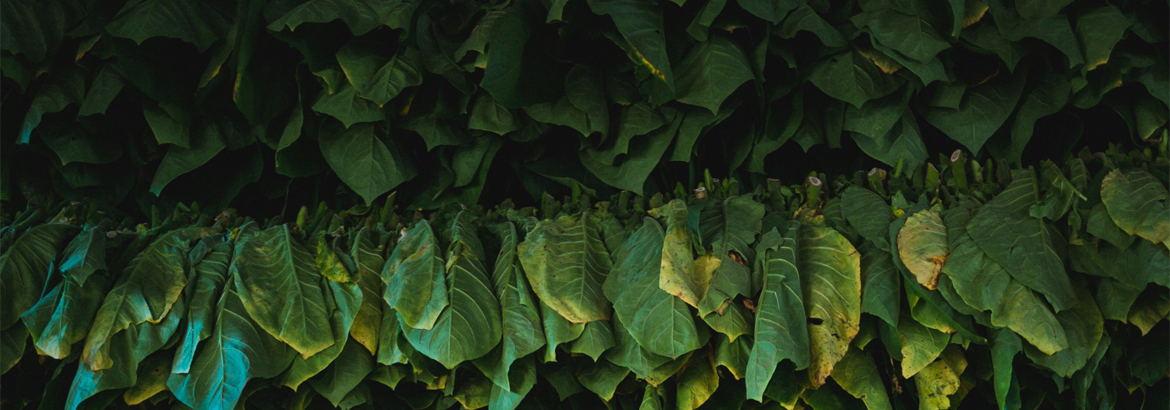
The bundled leaves
are brought into the
drying sheds (Casas
del Tabaco) to dry.
These are aligned on
an East/ West so
that the sun warms
one end of the shed
in the morning and
the other in the
afternoon.
Temperature and air
humidity are
carefully regulated
by opening and
closing doors
located at both
ends. The tobacco
leaves are attached
in pairs by way of
needle and cord to
wooden poles (Cujes
or Poles), which are
hung just above the
ground. During the
drying process which
takes about 50 days,
they are gradually
hung higher and
higher in the shed.
The leaves first
turn yellow and then
through the
oxidation process,
take on their famed
golden brown color. |

|
The First
Fermentation
|
The tobacco leaves
are packed together
into bundles (Gavillas)
and then moved into
the fermentation
house. Here they are
stacked in piles (Pilones),
reaching over three
feet high. If the
temperature of the
tobacco rises above
35°C, the piles are
dismantled and
allowed to cool
until they can again
be heaped up. The
first fermentation
lasts about 30 days,
within which the
leaves take on an
even color, resins
are reduced, and
ammonia and other
unwanted components
are dissipated.
|

|
De-ribbing and
Sorting
|
The tobacco leaves
are moistened with
water in order to
avoid discoloration.
Subsequently the
main ribs are
removed. The leaves
are then sorted,
depending upon
intended purpose,
color, size and
quality. The
complete de-ribbing
and final sorting in
up to 50 different
categories takes
place much later in
the factory. |

|
The second
Fermentation
|
The leaves are again
bundled together and
stacked into
meter-high piles
(Burros). The
tobacco goes through
a chemical change
which positively
influences its taste
and flavor, and
allows any remaining
foreign components
to diminish. The
second fermentation
is stronger than the
first and lasts up
to 60 days. The
wrappers undergo the
shortest
fermentation. |

|
Storage
|
After resting for
some days on
ventilation racks,
the tobacco is
pressed into bundles
called “Tercios”,
which are wrapped in
palm bark or banana
leaves. These
bundles are
delivered to local
collection points,
which are under the
control of the state
monopoly
HABANOS.
From this moment on,
the Republic of
Cuba
assumes
responsibility over
the further
treatment of the
tobacco. The Tercios
are kept up to three
years in depots –
for some formats
even longer – until
they are needed by
the cigar factories.
The taste and flavor
of the tobacco
continues to improve
during this storage
period. |

|
The Preparation
of the Tobacco
|
The wrapper leaves
are moistened so
that they are supple
and smooth;
afterwards they are
hung up over night
so that the humidity
can distribute
itself evenly along
the leaf. The next
day “Despallidores”
remove the central
ribs by halving the
tobacco leaf. Next
the leaves are
sorted by the
“Rezagadoras” into
piles by size, color
and structure. The
binder and filler do
not require
humidifying. The
various types of
leaves have
different ripening
intervals; the
blending master
attentively
supervises the
development of each
sort. Subsequently,
the leaves go to the
blending station,
where under strict
safety precautions
the blending process
takes place. It is
here that the
carefully guarded
secret recipes for
each Habanos are
kept. The mixtures
are handed out to
the cigar rollers
(Torcedores), the
amount of which is
just enough for the
production of 50
cigars. |

|
The Production
of Cigars
|
At the heart of each
factory is the
“Galera”. It is here
that the Torcedores
create the various
sorts and formats.
The only tools
employed are a
wooden table, a
sharp blade
(Chaveta), a
guillotine, a small
pot of vegetable
adhesive and – above
all –skillful
fingers. Each
Torcedor is able to
daily roll about 120
cigars which
perfectly keep to
the prescribed
lengths and
diameters. Samples
of their work are
regularly examined
by quality testers,
and should the
cigars not be found
good, this is very
serious affair for
the Torcedor as they
are paid by the
piece. |

|
The Escaparate
|
Directly from the
work bench, the
cigars are delivered
to a
climate-controlled
room, the “Escaparate”,
which is equipped
with high cedar wood
shelves. For at
least three weeks
and sometimes for
several months, the
finished cigars are
stored here under
ideal conditions:
The temperature lies
between 16°C and
18°C and the
relative humidity
between 65% to 70%.
|

|
Color Determination
and Attachment of
Cigar Bands
|
In order for a
perfect presentation
of the cigars, the
Escogedor (color
sorter) sorts them
into 65 different
shades of color. A
second Escogedor
arranges the cigars
into boxes so that
the color tones from
dark to light are
presented from left
to right. He also
chooses which side
of the cigar will be
displayed when the
box is opened at a
later date. The
Escogedores belong
to the best paid
workers in the
factory.
The Anilladora (bander)
removes the cigars
from the box in
order to attach the
bands. Under no
circumstances may
she change the
arrangement selected
by the Escogedor nor
the side of the
cigar to be
displayed. The
packed boxes are now
secured with the
guarantee seal of
the Cuban
government. The
crates are made of
cedar so that the
cigars can breathe
and mature further.
After a production
process spanning
several years, the
Habanos are now
ready for their
journey to foreign
lands, where they
are blissfully
awaited by
connoisseurs.
|

|
|
Copyright © by
DonCigarro, CH-8702
Zollikon
|
|
|
|
|
|
|